Virginia Man Pens Adventurous, Coming-Of-Age Memoir Titled ‘Life Travel And The People In Between’

Oct 11, 2022

With a scheduled release date of Oct. 25, Mike Nixon’s entertaining, fast-paced travel memoir provides an honest take on how to become a world traveler, form meaningful relationships, and live life to the fullest.

(PRUnderground) October 10th, 2022
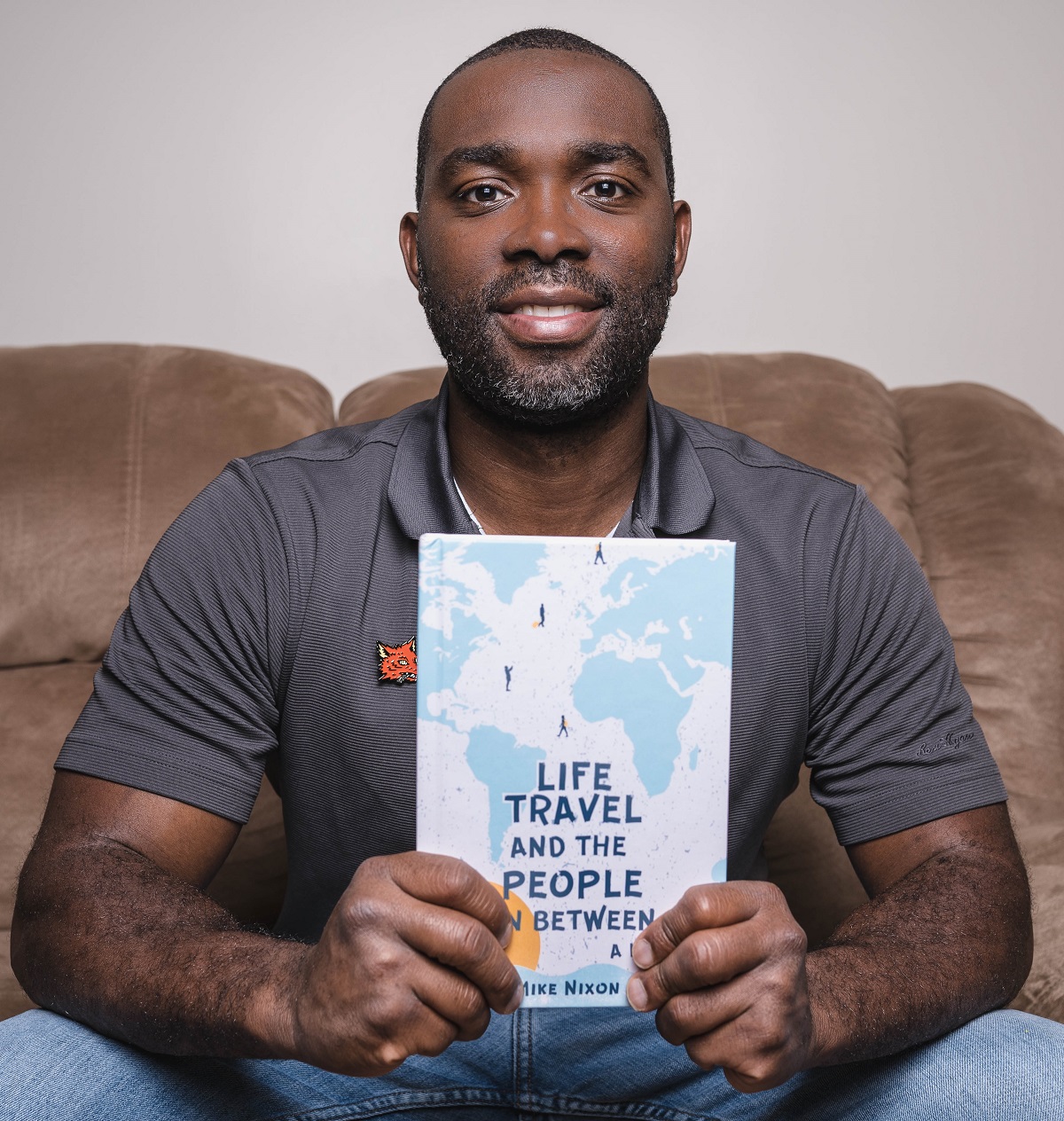
Only 11 percent of Americans have been to 10 or more countries, according to the Pew Research Center. However, for travel aficionado Mike Nixon, his journeys around the globe have taken him to more than 32 nations, inspiring him to release his very first memoir titled, “Life Travel And The People In Between.” The book officially hits bookstores on Oct. 25.

“While travel hasn’t provided me with the most comfortable life, it has added more value than anything else I’ve done. That’s because of what it has exposed me to – unique places, experiences, and, most importantly, people who have made life’s journey worthwhile,” said Nixon, who calls Accomack County, Virginia, home.

His 318-page memoir is filled with 26 page-turning chapters designed to satisfy the appetites of readers who crave adventure, enjoy humor, and appreciate useful tips for traveling abroad. Nixon’s fast-paced memoir also provides an honest take on forming meaningful relationships and living life to the fullest.

“There’s something in it for everyone – the person from the inner city who feels hopeless, the college student in debt, the recent college grad with a foot in the door of corporate America, the wanderer in unfamiliar territory, the only Black guy, the only American. I’ve been there, and I’ve met people who’ve been there and some,” Nixon said. “In this book, all our stories form one. That’s what makes this book authentic, fun, and relatable. I guarantee this is a travel memoir unlike any before it.”

Like a rollercoaster, Nixon’s memoir is intended to keep readers amused from beginning to end. One minute, a reader might be laughing. Another minute, their heart might be racing, or they may find themselves in deep thought as Nixon chronicles his personal experience with searching for a sense of belonging, coping with the loss of loved ones, being away from family and friends, as well as finding purpose through work.

“This planet is full of people just like you and me. They eat, sleep and work to stay alive. They have dreams, laugh, cry and pick their noses when no one is looking – just like you and me. Ultimately, everyone is doing the best they know how to make a living,” Nixon said.

A nature lover, some of Nixon’s favorite travel spots have included Yosemite National Park (USA), Machu Picchu (Peru), San Blas Islands (Panama), and the list continues. For this avid traveler, his memoir reminds us that the world is full of extraordinary places, and travel is the key that unlocks the doors and allows us to experience those marvels.

Writing this book has given him an opportunity to express his gratitude to the many people he’s crossed paths with throughout his life as well as enable him to preserve some wonderful memories – all while inspiring readers along the way.

“I want readers to be entertained. Also, I want readers to take away that the ultimate journey is life. Almost anyone can make it worthwhile by pursuing what they believe will bring their life the most satisfaction,” Nixon said. “Things will not always go as planned; however, push forward and make every attempt at finding peace along the way.”

“Life Travel And The People In Between” will be available for purchase on Amazon, Barnes & Noble, Kobo, and other online retailers beginning Oct. 25. The book can be purchased in e-book, paperback, and hardcover formats.

About Author Mike Nixon

Born in Saint Louis, MO, Mike Nixon grew up in the Hampton Roads area of Virginia. A graduate of Norfolk State University with a degree in entrepreneurship, he’s spent nearly a quarter of his life outside the United States. Over the years, Nixon’s determination to travel has led him to some unique experiences, including studying abroad in the Dominican Republic, serving as a Peace Corps volunteer in Paraguay, working for an NGO in Nicaragua, and serving as a U.S. Navy Sailor in Japan. While travel hasn’t provided him with the most comfortable life, it has afforded him a purposeful life full of adventure, leading to his debut memoir, “Life Travel And The People In Between.” To learn more, visit him on Instagram at @Brogotravel.

The post Virginia Man Pens Adventurous, Coming-Of-Age Memoir Titled ‘Life Travel And The People In Between’ first appeared on PRUnderground.

Press Contact

Name: Spotlight Media Pros - Nikki Gaskins Phone: 843-284-6597 Email: Contact Us Website: https://www.spotlightmediapros.com/

Original Press Release.

More News
Democrats have big healthcare plans. The industry is preparing for a fight.

Oct 29, 2026

Democrats have big healthcare plans. The industry is preparing for a fight.

Protesters in Minnesota advocate for universal healthcare. | David Berding/Getty Images for People's Action Institute Americans want changes to their healthcare, and the candidates in this year’s midterms are making bold promises about how they are going to improve it: Medicare-for-all, or a public health insurance option, or free primary care for everyone. If Democrats win big this year, they could build up momentum to control Congress and the White House in 2029, which could leave them well-positioned to take on the thorny problem of how to fix the US health system. History suggests that this won’t be easy. For every Affordable Care Act, you have the failed attempt to repeal it or the calamity of the Clinton-era healthcare initiative. Americans want change — but they fear it, too. I’ve spent years reading healthcare polls, talking to voters, attending focus groups. The public’s opinion of the healthcare industry has grown more and more sour, and distrust of the medical establishment is at an all-time high. People are sick of having a broken health system, but they worry that big changes could end up being bad for them.  Even though a meaningful attempt at reform is still years away and universal health care in any form might seem like a progressive pipe dream, the industry is not sitting idly by.  As Democrats have started to roll out policy proposals in anticipation of winning back Congress, the industry has been there to start making its case. In some campaigns, that means backing Republicans, but it also means lobbying Democratic Party leaders to hold the line against their more progressive members who want to push for far-reaching changes.  The question now is: Will their old playbook work? Can the industry convince Democrats to scale back their policy ambitions, or is their grip on Congress loosening? “The next two years are actually quite pivotal, for doing the groundwork and all the necessary socializing, consensus-building,” said Kim Monk, a former congressional healthcare staffer who co-founded the private-sector research firm Capital Alpha Partners. “That’s the work that gets you to a point where either party decides, okay, this will be on our platform — or not.” That will be the tug-of-war of the next two years: a PR battle waged between health companies with hundreds of millions of dollars at their disposal on one side and progressive lawmakers, activists, and patient advocates on the other that will ultimately determine what’s possible in the next phase of American healthcare. The healthcare industry doesn’t want Democrats to win too big In the short term, the industry is hedging its bets in the face of a Democratic wave.  Private enterprise has historically backed the Republican Party, but that’s starting to shift. What the healthcare industry values above all else is balance. Democrats operating without any constraints are more likely to impose government regulations on medical companies. But full GOP control comes with its own risks, like the $1 trillion in Medicaid cuts passed as part of the One Big Beautiful Bill Act, which has already led to clinics and hospitals laying off staff or even closing facilities altogether. Sign up for the Good Medicine newsletter Our political wellness landscape has shifted: new leaders, shady science, contradictory advice, broken trust, and overwhelming systems. How is anyone supposed to make sense of it all? Vox’s senior correspondent Dylan Scott has been on the health beat for a long time, and every week, he’ll wade into sticky debates, answer fair questions, and contextualize what’s happening in American health care policy. Sign up here. “At least for the short term, I imagine the healthcare industry would welcome control of Congress by Democrats, creating more predictability, forestalling more cuts in Medicaid and the Affordable Care Act, and potentially reversing or delaying some of the cuts that have already been made,” said Larry Levitt, executive vice president for health policy at KFF. “The longer-term political calculus for the healthcare industry is more complicated. Many Democrats are pushing for a bigger role for government in health care.” In other words, while healthcare companies might welcome a Democratic House as a check on President Donald Trump’s unpredictability, they aren’t necessarily hoping for a massive blue wave that could make significant reforms a serious possibility if Democrats were to win the White House in 2028.  The industry’s MO when it looks like a wave election is brewing is to balance the scales: I reported in 2016 how, in what was looking like a good year for Democrats, the drug industry poured money into the campaigns of Republican candidates by a 6-to-1 margin in competitive races, hoping to stifle the agenda of presumed President Hillary Clinton. (Of course they, like the rest of us, are still susceptible to being wrong.) And that’s how the industry has been approaching the 2026 election: In many of the pivotal House and Senate races, they are backing the GOP.  As healthcare journalist Merrill Goozner reported last week, the American Hospital Association PAC and PhRMA, a drug industry trade group, have given a combined $14,500 to Republican incumbent Jon Husted and none to his Democratic challenger Sherrod Brown in the historically expensive Ohio Senate race. In Maine, Republican Sen. Susan Collins has received donations from all of the major healthcare trade groups — hospitals, pharma, insurers, and doctors — while her opponent, Democrat Troy Jackson, got none. (He also has sworn off corporate PAC money.) Even in an open race without an incumbent, like the Iowa Senate campaign, the Republican candidate has scored donations from hospitals and pharma, but the Democrat has not, Goozner reported. If Democrats take the House but not the Senate, that would immediately put a damper on their healthcare reform plans — whereas winning a Senate majority would allow them to start drafting and debating bills in both chambers with an eye toward what could actually pass if they win in 2028 too. “If there is actually a blue tsunami next week and Democrats get 51-plus [members] in the Senate, that’s a really big deal,” Monk said. “You can’t just say this doesn’t matter because Trump’s going to veto it, because I think it very much becomes a 2028 issue.” And even as they work to push the next Congress more to their ideological liking, the healthcare industry is preparing for the fight that comes after. The industry is prepping its counterattacks on ambitious healthcare proposals After the midterms wrap up, the next two years in Congress and on the presidential campaign trail will be crucial. The industry is already working to set the terms of the debate and push back against big changes. Each subset of the industry has its own versions of this argument: Pharma warns that price controls could stifle innovation, insurers warn that coverage mandates will increase premiums, hospitals warn that constraints on their funding could lead to closures and job losses. (There’s a well-known saying among DC insiders that every congressional district has a hospital, making every member potentially susceptible to the industry’s message that new healthcare legislation could result in their own constituents losing their jobs.) They’ve started by trying to discredit the more sweeping health policy proposals before new members ever arrive in Washington, DC. In Texas, for instance, Republican groups have leaned on an industry-commissioned study to attack Democratic Senate candidate James Talarico for supporting Medicare-for-all, warning that it would lead to cuts for rural hospitals — at least according to an analysis produced by the Partnership for America’s Future, a coalition of industry groups that exists explicitly to oppose Medicare-for-all or a public option. They ran a similar ad against Democrat Janelle Stelson, who’s trying to topple incumbent Rep. Scott Perry in Pennsylvania.  The industry is trying to plant the idea in voters’ minds that these big, bold proposals may sound superficially appealing, but carry significant risks: You could lose your plan, you could lose your doctor, you could pay higher taxes. (And they often have their own studies to back those arguments, like the one cited in this year’s campaign, to counter the evidence offered by advocates in support of reform.) And it might work exactly like it has in the past. As John McDonough, a former congressional healthcare staffer and author of America’s Wrong Turn: US Health Care in the Neoliberal Era, put it to me, the history is clear: “Every comprehensive effort, defeat, and every incremental effort succeeds.” That is in part because of the healthcare industry’s influence and its success in framing the debate. On top of trying to sway the competitive races, the industry is also trying to keep its most important allies within both parties happy ahead of the midterms. As the Center for Health and Democracy’s data shows, the health insurance industry PACs alone have given tens of thousands of dollars to Democratic and Republican leaders, as well as senior members of the healthcare-focused House and Senate committees. It’s another hedge, an attempt to keep the members who will decide what’s on the agenda next year on their side. The industry supports reversing the GOP’s massive Medicaid cuts and increasing funding for the ACA marketplaces, two top-priority items for Democrats if they win Congress in the midterms. But they are hoping the party’s leaders will steer their members away from some of their more radical ideas for overhauling healthcare. Because while individual sectors within healthcare may squabble over smaller-scale reforms, the entire industry is united against plans to fundamentally change the US health system. (They are also increasingly owned by the same parent company, as consolidation in the medical sector becomes more and more common.) “The healthcare industry is al

YOUR NEWS, OUR NETWORK.

Do you have Great News you want to tell the world?

Be it updates about your business or your community, you can make sure that it’s heard by submitting your story to our network reaching hundreds of news sites across 6 verticals.

The Daily Feeder

A leading news network dedicated to keeping you up-to-date on the world's most important political, business, and cultural news into a three-minute read.

NEWSLETTER