STUF Advances Taiwan–U.S. Net-Zero Collaboration Through Green Finance and Circular Economy at New York Climate Week

Oct 5, 2026
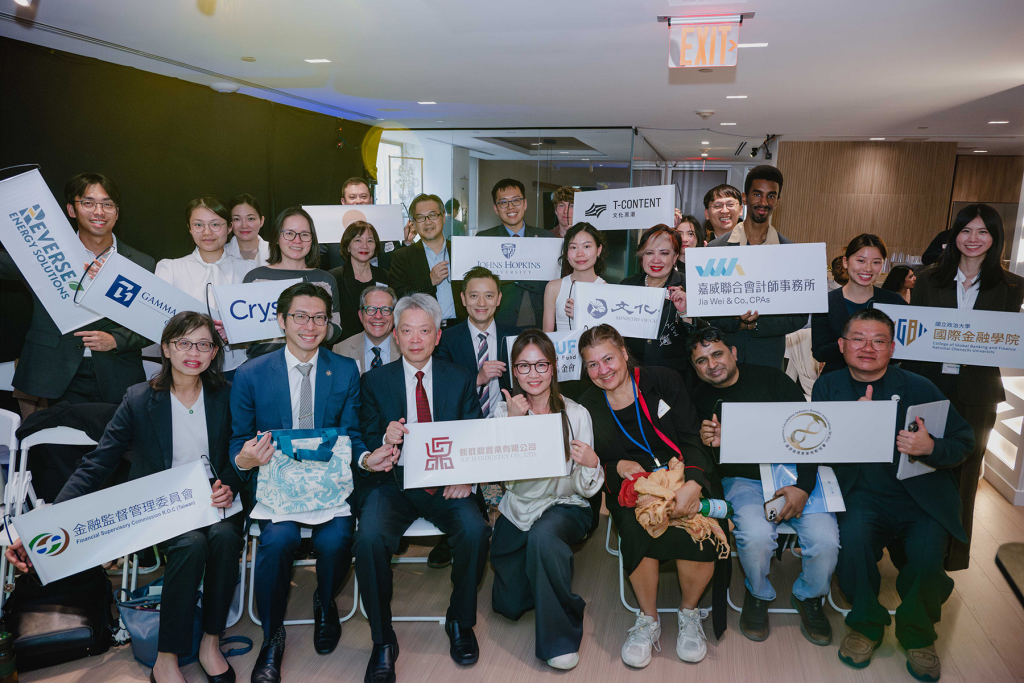
(Photo via STUF United Fund Asia Pacific Center)

NEW YORK, NY (MERXWIRE) – STUF United Fund hosted the forum “Circular Economy & Green Finance — From Circular Materials to Climate Capital: Scaling Asia–U.S. Net-Zero Partnerships” on September 25 at its New York headquarters, bringing together leaders and experts from finance, industry, academia, and civil society to explore how sustainable innovation can attract capital, accelerate industrial applications, and strengthen Taiwan–U.S. cooperation toward net-zero goals. The forum opened with remarks by Ambassador Tom Chih-Chiang Lee of the Taipei Economic and Cultural Office in New York, followed by Peter C. L. Lin, Chairman of STUF United Fund Asia Pacific Center, who highlighted STUF’s commitment to advancing international exchange and cross-sector partnerships for sustainable development. Through the forum, STUF provided a platform for stakeholders across policy, finance, technology, and industry to exchange perspectives, identify shared priorities, and explore opportunities for future cooperation during New York Climate Week.

Green Finance: Mobilizing Capital for Climate Solutions

The first session focused on green finance and the role of capital in advancing climate solutions. Ying-Hsin Lee, Director of the Taiwan Financial Supervisory Commission’s New York Office, and Prof. David Audley, Professor of Financial Technology at Johns Hopkins University, shared perspectives on how financial systems and investment mechanisms can support sustainable innovation and industrial transformation. For many climate technologies and circular economy solutions, access to financing and strategic partnerships is essential at every stage—from research and development and technical validation to commercialization and large-scale deployment.

The discussion examined how promising climate solutions can secure the resources needed for growth while helping financial institutions and investors better understand their technological value, commercial potential, and real-world applications.

Circular Materials: Connecting Innovation, Industry, and Market Demand

The second session turned to circular materials, bringing together perspectives from technology, manufacturing, and renewable energy. Speakers included Lu Tung-Hsuan, Convener of the Industry–Academia Cooperation Committee of the Resource Circulation Promotion Association; Wu Hsiu-Fen, Chairwoman of S.C.D. Industrial Co., Ltd.; and Matthew Tsai, Investor Relations Representative of Global Renewable Energy Solutions (RES). The session explored topics ranging from material recovery and reuse to the integration of circular technologies into industrial processes and the development of viable, sustainable business models.

Participants emphasized that the long-term development of the circular economy depends not only on technological innovation, but also on its ability to respond to actual market needs. Through presentations and panel discussions, the forum connected financial and industrial perspectives, encouraging further dialogue on how capital, technology, market demand, and international partnerships can work together to accelerate sustainable transformation.

Building Connections Beyond the Forum

Following the formal sessions, participants continued their conversations during a networking reception, exchanging information about their ongoing projects and identifying potential areas for collaboration. STUF hopes that the relationships established in New York will serve as a foundation for future cross-border partnerships and lead to concrete initiatives connecting Taiwan, the United States, and the broader international community.

Art Meets Sustainability

The forum also featured artworks by artist Yang Chung-Ming, adding an artistic dimension to the discussions on materials, sustainability, and the circular economy. By integrating art into the forum environment, participants were invited to consider materials from a different perspective and reflect on how creativity, reuse, and sustainability can intersect. The artworks complemented the forum’s broader themes and offered another way to engage with the possibilities of circularity beyond financial and industrial applications.

STUF United Fund will continue to connect partners from Taiwan and around the world and promote cross-sector engagement among finance, industry, academia, and civil society. Through international platforms such as New York Climate Week, STUF aims to turn dialogue into meaningful partnerships and translate shared commitments to sustainability into concrete collaborative action.

Media Contacts:
STUF United Fund Asia Pacific Center
Wan-Yu Huang
[email protected]
https://www.facebook.com/stufunitedfund

SOURCE: STUF United Fund Asia Pacific Center

More News

How October 7 changed everything

Oct 7, 2026

How October 7 changed everything

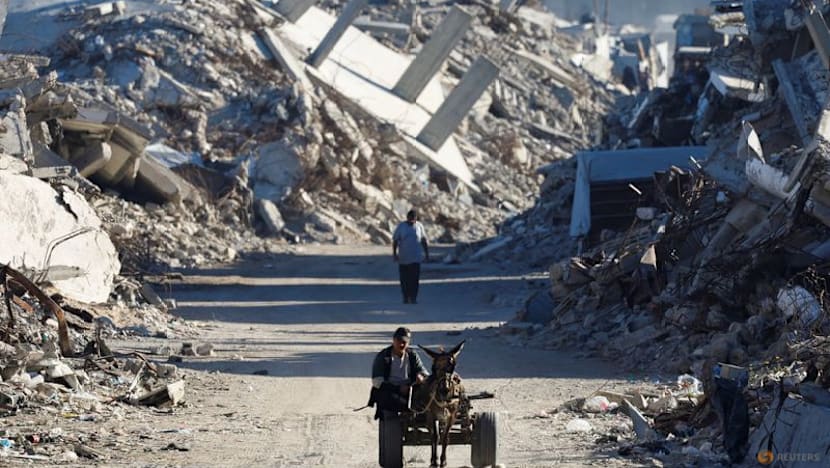
Israelis visit the Nova music festival memorial site to mark the third anniversary of the October 7, 2023 attacks. | Saeed Qaq/Anadolu via Getty Images This story appeared in Today, Explained, a daily newsletter that helps you understand the most compelling news and stories of the day. Subscribe here. Jewish communities in Israel and around the world are currently marking the third anniversary of the October 7 attacks that killed 1,200 people and triggered the war in Gaza. Memorials for the victims of the attacks have been held at homes, on highways, and at the site of the Nova music festival. In Tel Aviv, a massive art installation at the Trumpeldor beach commemorated both the victims and the 251 hostages taken by Hamas three years ago. Of those hostages, 166 have since returned alive, and the remains of the last deceased captive were released to Israel in January. But there’s no undoing the national trauma of the October 7 attacks — the deadliest massacre of Jewish people since the Holocaust — or the brutal retaliatory campaign that Israel launched afterward. Those events profoundly changed Israel, Gaza, the broader Middle East, and the United States, and they continue to shape global and domestic politics. So today, we’re taking a look at the very long shadow of the October 7 attacks and Israel’s response to them. Go a little deeper View Link Writing about the first anniversary of October 7 two years ago, Vox’s Zack Beauchamp warned that the “horrors” first triggered by the attacks would continue to unfold in tragic and unforeseeable ways. “Events that might seem contained to the Middle East have come to hurt people around the world,” he wrote, “in ways that we may not yet fully understand or even be capable of predicting.” That hurt has undeniably been most acute in the Gaza Strip, where three years of war have reduced entire cities to rubble. Israel’s military campaign has killed more than 74,000 Palestinians — most of them civilians — since October 2023. Most of Gaza’s 2 million residents have also been displaced from their homes, crowded into makeshift shelters and refugee camps riddled with hunger and disease. But the consequences of October 7 extended beyond Gaza. Settler violence against Palestinians intensified in the occupied West Bank. And the ensuing conflicts also weakened Iran and changed the balance of power across the Middle East. That’s because Iran had long relied on its allies, like Hamas in Gaza and Hezbollah in Lebanon, to project power and deter attacks by its longtime rival, Israel. After October 7, however, Israel significantly weakened both groups, leaving Iran vulnerable and setting the stage for the direct strikes on Iran that Israel and the US began last winter.  Both the war in Iran and the continued occupation of Gaza have badly hurt Israel’s international image. Across 36 countries surveyed by Pew last spring, a median of 67 percent of adults viewed Israel negatively. That disapproval has translated into diplomatic shifts, as well: 155 countries — including longtime allies of Israel, such as the United Kingdom, Canada, and Australia — now officially recognize Palestinian statehood, up from 136 before the war. That doesn’t change much on the ground, but it represents a real rebuke to Israel.  In the US, meanwhile, Israel has become a huge flashpoint in domestic politics. While more than half of Americans had a favorable view of the country before October 7, sentiment deteriorated sharply in 2025 and 2026, particularly on the left. The issue could help determine some key midterm races, like the Michigan Senate election, where Democrat Abdul El-Sayed has called for ending US military aid to Israel. That’s a policy nearly half of House Democrats and many potential presidential candidates have also endorsed.  Cutting off US aid to Israel isn’t likely to change the country’s stance toward Palestinians, however. (Israel is a wealthy country in its own right, and American aid represents just a small piece of its budget.) Instead, changing Israeli policy on Gaza and the West Bank would likely require far more aggressive pressure — pressure that, even in the current political environment, the US is unlikely to apply. A single day may have kicked off a cascade of hurt and horrors. But putting an end to them will take far more time. One link for later ➨ Cultivate hope. It can feel difficult (not to mention: naive, pointless, and exhausting) to maintain optimism in the face of current events. So Jamil Zaki, a psychology professor and the director of the Stanford Social Neuroscience Lab, suggests another tact: Do away with blind optimism and lean into hope — that belief that the future could turn out well, but requires real care and attention. Before you go… Did you know…that sea turtles regularly cry (okay: “shed tears”) to rid their bodies of excess salt? Scientists are studying sea turtle tears to learn more about animal navigation.  Today’s trivia: What’s the word for a baby eagle? (You can find this and other brain puzzles in Vox’s daily crossword. Look for the answer in tomorrow’s edition.) Yesterday’s trivia: Yesterday we asked you for the final letter of the Greek alphabet. That would be omega, as in the Bible verse, Swiss watch brand, and nutritional supplement.

YOUR NEWS, OUR NETWORK.

Do you have Great News you want to tell the world?

Be it updates about your business or your community, you can make sure that it’s heard by submitting your story to our network reaching hundreds of news sites across 6 verticals.

The Daily Feeder

A leading news network dedicated to keeping you up-to-date on the world's most important political, business, and cultural news into a three-minute read.

NEWSLETTER