Six Days in Fallujah Recreates True Stories From The Toughest Battle of the Iraq War

Feb 11, 2021

SEATTLE, Feb. 11, 2021 /PRNewswire/ -- Victura and Highwire Games today announced Six Days in Fallujah, a first-person tactical military shooter based on true stories from the Second Battle for Fallujah in 2004, coming to PC and consoles in 2021. Originally announced by Atomic Games in 2009, Six Days in Fallujah returns with a new publisher, new developer and an all-new game from many of the core leadership team who created the original Halo and Destiny games.

Continue Reading

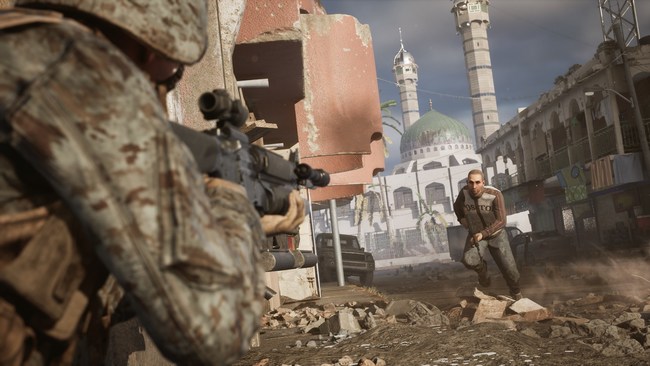
Six Days in Fallujah (PC/Console) -- See the battle in Fallujah through the eyes of the Marines that were on the ground. Direct troops. Make split-second decisions like they had to in real life. Experience on of the bloodiest U.S. battle since 1968.

Six Days in Fallujah is a first-person tactical military shooter based on true stories from the Second Battle for Fallujah in 2004, coming to PC and consoles in 2021.
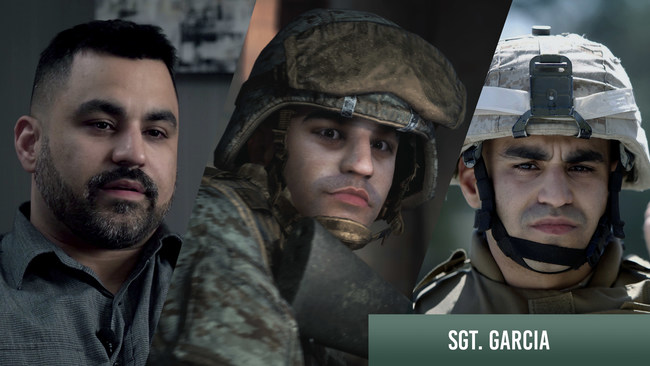
"Sometimes the only way to understand what's true is to experience reality for yourself," former Marine Sergeant Eddie Garcia, who was wounded during the Battle for Fallujah and proposed the original idea for Six Days in Fallujah.

"Sometimes the only way to understand what's true is to experience reality for yourself," says former Marine Sergeant Eddie Garcia, who was wounded during the Battle for Fallujah and proposed the original idea for Six Days in Fallujah in 2005. "War is filled with uncertainty and tough choices that can't be understood by watching someone on a TV or movie screen make these choices for you. Video games can help all of us understand real-world events in ways other media can't."

See the Six Days in Fallujah Announcement Trailer:
https://youtu.be/3O0zIa5CGNM

The Second Battle for Fallujah began in 2004 after Al Qaeda seized control of one of Iraq's major cities. The battle proved to be the toughest military conflict for Western forces since 1968.

Atomic Games announced Six Days in Fallujah in 2009, but saw the title abandoned by its original publisher following controversy about the ability of video games to cover challenging real-world events. Victura is a publishing and production company founded in 2016 by former Atomic Games CEO Peter Tamte with the goal of bringing a new Six Days in Fallujah to players, along with other games based on true stories.

Working in partnership with frontline Marines and Soldiers who fought in the Battle for Fallujah, Victura and Highwire have spent more than three years building unique technologies and game mechanics that bring players closer to the uncertainty and tactics of modern combat than other video games have explored.

Over 100 Marines, Soldiers, and Iraqi civilians who were present during the Second Battle for Fallujah have shared their personal stories, photographs, and video recordings with the development team. The game gives these stories voice through gameplay and first-person accounts captured in original documentary interview footage. Six Days in Fallujah aims to be the most authentic military shooter to date and to tell these military and civilian stories with the integrity they deserve.

"It's hard to understand what combat is actually like through fake people doing fake things in fake places," says Peter Tamte, CEO of Victura. "This generation showed sacrifice and courage in Iraq as remarkable as any in history. And now they're offering the rest of us a new way to understand one of the most important events of our century. It's time to challenge outdated stereotypes about what video games can be."

Six Days in Fallujah will launch for PC and consoles in 2021. Victura will announce more details about Six Days in Fallujah in the coming weeks.

For more information about the game go to Six Days in Fallujah at www.sixdays.com where you can also read a letter from the team about why it's important for this game to be made (https://sixdays.com/why). Six Days in Fallujah is also on Twitter (@VicturaGG), and YouTube (https://www.youtube.com/channel/UC0_ZHfbMbeosqhCQutQgzVw).

MEDIA CONTACTS

For United States, Canada, Middle East, and Asia, please contact:
Lori Mezoff

[email protected]

More News

The company behind Skittles might be to blame for your big vet bills

Oct 11, 2026

The company behind Skittles might be to blame for your big vet bills

Nova, a 6-month-old Australian shepherd, gets vaccinated at the Community Animal Medicine Project, a low-cost veterinary clinic in Northridge, Los Angeles, on July 7, 2026. | Hans Gutknecht/MediaNews Group/The Los Angeles Daily News via Getty Images Whenever I have dinner with friends, the conversation always ends up on one of three topics: how hard dating is, the hunt for affordable housing, or an update on everyone’s pets. The last on that list includes cute photos and veterinarian updates. I love hearing about my friends’ cats and dogs. But I also have to admit that I just don’t get it. I don’t have a pet. I never have. (We won’t discuss the ill-fated caterpillar in elementary school.) I’m in the minority: Over half of American households have pets. Which means that over half of American households have also seen the cost of pet care go up in recent years.   Helaine Olen is the proud pet parent of a Havanese poodle mix named Barney Rubble. She’s also the managing editor at the American Economic Liberties Project, an antitrust organization, and she says people often aren’t prepared for how expensive it can get.  Some of it is inflation, Olen says, but veterinary care is a major factor. “The same medical advances that have kept us alive longer and we consider miracles — whether it’s cancer drugs or stem cell therapies or various pharmaceuticals — the same is true for your cats and dogs,” Olen says. Decades ago, a cat having an MRI was unheard of; now, it’s common. But it’s not just expanded access and improved technology that’s driving prices up. Olen says that who’s behind that healthcare is a factor. “Big corporations and private equity have seen all of this, know that people say they will do anything for their pets, know that they think of their pets as children, and they have rushed into the sector,” she told Vox. So how did private equity get involved in the lives of our pets? And what happens when the prices keep climbing? We discuss that and more on the latest episode of Explain It to Me, Vox’s weekly call-in podcast.  Below is an excerpt of my conversation with Olen, edited for length and clarity. You can listen to the full episode on Apple Podcasts, Spotify, or wherever you get your podcasts. If you’d like to submit a question, send an email to [email protected] or call 1-800-618-8545. What kind of costs are we talking about? When your pet is young, you’re probably spending several hundred dollars a year for various vaccines, spay and neuter, annual checkups. But the real costs start coming in as they get older and they need maintenance.  For tooth cleaning, pets need to be put under anesthesia. You’ll spend a minimum of $1,000. That will be even higher if a pet’s tooth has to be removed.  I’ve spoken to people whose pets have back legs that have collapsed or disc herniations. You can easily be out over $10,000 on a surgery. You can easily spend four figures on a 24-hour overnight. I spoke to somebody who was quoted $3,500 a night for just an observational overnight. You mentioned that some of this comes down to who owns pet clinics and how that’s changing. Who owns them now? Traditionally, it was an independent practice. But in the past 10 to 15 years, big corporations and private equity have moved into the space. The largest owner of vets in the United States right now is a group called Mars. And if Mars sounds familiar to you, that’s Mars as in Skittles.  They own around 2,500 vets under the names of VCA, Banfield, and Blue Pearl. I’d say somewhere between a third and 50 percent of vet clinics are owned by corporations. It was 10 percent or less than 10 percent a little over a decade ago. What caused this spike and why is a candy company behind it? As people realize how much can be done to help their pets, the corporations and private equity basically saw what one analyst described as low risk, high reward. I’ve spoken to employees of some of the larger chains who have told me that prices went up routinely every six months or every nine months or once a year.  In Britain, there was a recent government investigation into all of this by the Competition and Markets Authority, their equivalent of the Federal Trade Commission. They determined that private equity and corporate ownership is responsible for a billion pounds spent on pets over a five-year period that otherwise wouldn’t have been spent, and that people were paying about 16 percent more at vets owned by large corporate outfits versus independent vets. How are people paying for this if it’s so expensive? I live in Los Angeles, and I wrote a piece for New York magazine a few months ago about all the people here who are now driving their pets down to Tijuana because it is so much less expensive down there.  Pet insurance is a very mixed bag. It is extremely expensive in many cases. It goes up at very high rates. My own pet insurance increased by 30 percent from last year to this year. And by the way, my dog Barney Rubble is 2 and a half years old. Wow. He’s still so young. He has had no issues that I am aware of that would account for a 30 percent increase.  The other thing with pet insurance, unlike human health insurance, is there is no preexisting [conditions] clause. I have lost count of the number of people I’ve interviewed over the years who discovered too late that their pet health insurer deemed something a preexisting condition. What do people do when they get to the point where this costs too much?  In some cases, they run up debt. Buy now, pay later services are increasingly moving into the veterinary area as well. In other cases, they surrender the animal. If you talk to people at shelters, they will say that they believe that part of the uptick they’ve gotten in surrendered animals has to do with the increase in costs of veterinary care. I imagine that just feels like such an impossible choice, like choosing between this money you don’t have and the quality of life for something that you love. The emotions are huge. This is in part why private equity and corporations have moved in: They know people are going to feel very emotional about their pets and that they’re going to want to do anything they can to keep them alive or keep them healthy or keep them pain-free, and that they will pay almost any price.  When my last dog was diagnosed with heart disease, I was determined to keep her going for a couple of years. I had her on one medication that cost $300 a month. I was like, “I can’t lose my Katie.” The tragic thing about pets is they are both better than us — in my opinion — and they live shorter lives. You are going to lose your pet eventually. It’s just the most heartbreaking thing in the world.

YOUR NEWS, OUR NETWORK.

Do you have Great News you want to tell the world?

Be it updates about your business or your community, you can make sure that it’s heard by submitting your story to our network reaching hundreds of news sites across 6 verticals.

The Daily Feeder

A leading news network dedicated to keeping you up-to-date on the world's most important political, business, and cultural news into a three-minute read.

NEWSLETTER