
From the Public Defender's Office to Probate Practice: Jamie Sahagian on Why Procedural Care Matters in Legal Support
Nov 28, 2026
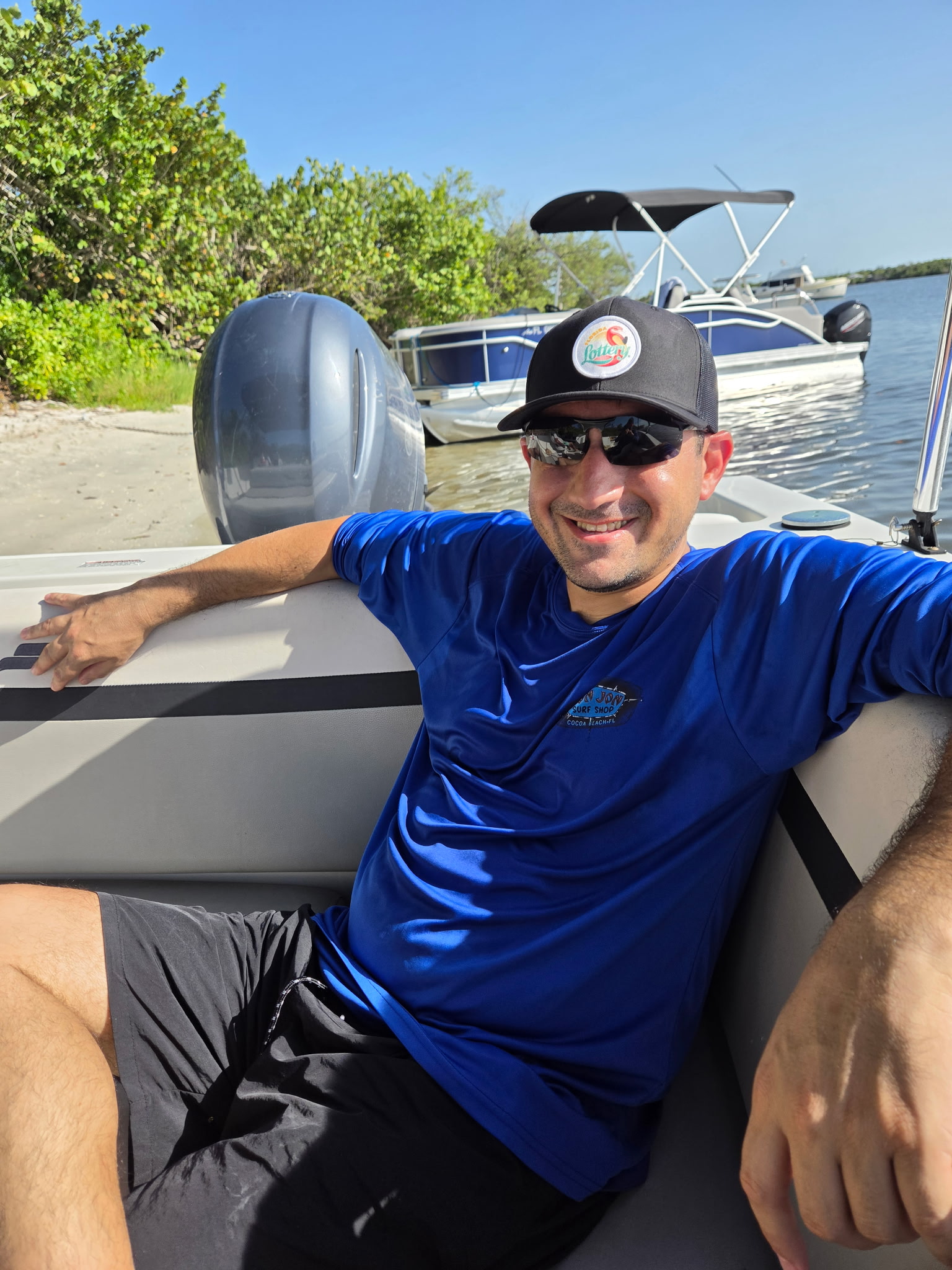
How work in Mental Health Court and probate administration shaped a deadline-first approach to paralegal practice, in Riviera Beach, Florida.
Riviera Beach, Florida Nov 27, 2026 (Issuewire.com) - In a legal system built on filing windows, service rules, and calendar entries, the people who keep a case on schedule rarely appear in the record. Their work shows up only when it is missing. Jamie Sahagian, a paralegal based in Riviera Beach, Florida, has worked in that quiet position across several practice areas, and the route he took to reach it crossed a research laboratory, a law school, a public defender's office, and a probate practice.
A Path Through Three Practice Areas
Sahagian began in the sciences. He earned a Bachelor of Science in Microbiology and Cell Science from the University of Florida, with minors in Philosophy and Business Administration, supported by a Florida Bright Futures Scholarship. As an undergraduate he worked as a research assistant at the University of Florida, studying the molecular genetics of maize and sorghum. After graduating, he managed a transgenic mouse colony at the Max Planck Florida Institute for Neuroscience, supporting research on neuronal signal transduction that was later published in Frontiers in Cellular Neuroscience.
Law came next. At the City University of New York School of Law, Sahagian served as a Senior Staff Member of the CUNY Law Review and held both the CUNY Justice Roundtable Fellowship and the Hamill Family Summer Fellowship in Children's Rights. The lab had taught him to document every step. Law school taught him where documentation matters most, at the points where a missed date can change what a court is able to hear.
The sequence mattered. A laboratory records what happened so that others can repeat it. A court record does something similar, preserving what happened so that others can rely on it. Sahagian noticed the parallel early and has returned to it often when explaining how a scientist ended up working in law.
Learning the Work in Public Defense
Sahagian's first legal support role was at Queens Defenders, a public defender firm in Queens, New York that was formerly known as Queens Law Associates. Public defense gave him an early view of how much of a case rides on administration. Hearings move, discovery arrives in pieces, and a calendar that is wrong by a single day can ripple through a client's entire matter.
"Nobody warns a new paralegal how much of the job is knowing what comes next," Sahagian says. "The argument gets the attention. The calendar is what keeps the argument alive."
Those early months set a pattern. Sahagian learned to read a docket the way a researcher reads a protocol, looking for what comes next and what depends on it. He also learned that a calendar is a shared document, and that colleagues relied on it being right.
He carried that habit to Florida, where he worked as a paralegal in the Office of the Public Defender in Palm Beach County, part of the 15th Judicial Circuit. In Mental Health Court matters he drafted orders and motions, work that depended on accurate records and careful sequencing from the first day a file opened.
Deadlines as the Organizing Principle
Across every setting, Sahagian describes the same organizing idea. He believes a case is easier to manage when every date is known early, entered in more than one place, and checked against the file before anyone needs it.
"Deadlines are the whole job," Sahagian explains. "Everything else a paralegal does, the drafting, the organizing, the follow-up, either protects a date or depends on one."
The principle sounds simple, and in his account it is. What makes it demanding is consistency. A date entered carefully on a quiet Monday still has to be rechecked when the caseload is heavy and three other matters are asking for attention.
Sahagian describes the discipline as unglamorous on purpose. He enters dates in more than one place so that a single mistake cannot hide. He reviews the calendar at the start of each week and again before leaving on Friday, and he reads the file for anything that has changed since the last review.
Carrying Public Defense Habits into Probate
Sahagian later moved into probate and estate administration as a paralegal at Brookmyer, Hochman, Probst & Jonas, P.A. The subject matter differed from criminal defense, but he found the demands familiar. Probate is a process with fixed steps, court-set timelines, and many parties waiting on the next filing.
"A probate file and a criminal file look nothing alike," Sahagian says. "But both run on the same thing, which is someone making sure the next step happens on time and gets written down."
Probate also introduced a second lesson. Many of the people connected to a matter are waiting on information, and a steady flow of accurate updates reduces uncertainty for everyone. Sahagian says clear communication became as important to him as accurate dates.
He credits his earlier work for the way he approaches that process. Public defense taught him to treat every deadline as live. The laboratory taught him to keep a record that someone else could pick up and follow without a phone call.
Time Outside the Office
Away from work, Sahagian spends his time on golf, biking, snorkeling, fishing, and boating, and he enjoys watching boat races. He sees a pattern in them. Golf rewards patience and a steady routine. Fishing rewards showing up prepared and waiting without fuss. Biking and snorkeling reward pacing and attention to what is directly ahead.
"None of it is about speed," Sahagian says. "It is about doing the next thing correctly and not rushing the part that matters." He lives near family in Florida and counts time with them as the center of his week.
The habits cross over in both directions. Sahagian says the patience that boating and fishing require shows up in how he handles a long document review, and the planning that a file demands shows up in how he prepares for a day on the water.
Looking Ahead
Sahagian expects the next stretch of his career to stay rooted in the same principle. He believes legal support work is judged by what does not go wrong, and that the most valuable paralegals are the ones whose files are ready before anyone asks to see them.
He also sees the career as continuing in the same direction it has always moved: toward settings where careful process matters and where a reliable file is valued. Sahagian says he is more interested in doing that work well than in describing it.
"A client rarely sees a calendar entry," Sahagian says. "What they see is a case that moved forward when it was supposed to. That is the whole point, and deadlines are the whole job."
About Jamie Sahagian, Paralegal
Jamie Sahagian is a paralegal based in Riviera Beach, Florida. His background spans scientific research and legal support, including work at the University of Florida, the Max Planck Florida Institute for Neuroscience, Queens Defenders, the Office of the Public Defender in Palm Beach County, and the probate practice of Brookmyer, Hochman, Probst & Jonas, P.A.
He holds a Bachelor of Science in Microbiology and Cell Science from the University of Florida and studied at the City University of New York School of Law, where he served on the CUNY Law Review. Sahagian is known for a deadline-first approach to legal support built on careful calendaring, clear records, and steady follow-through.
Source :Jamie Sahagian
This article was originally published by IssueWire. Read the original article here.
More News









Recommended







YOUR NEWS, OUR NETWORK.
Do you have Great News you want to tell the world?
Be it updates about your business or your community, you can make sure that it’s heard by submitting your story to our network reaching hundreds of news sites across 6 verticals.