Founder Who Couldn't Keep Up With His Own Subscriptions Launches Adviserry

Oct 5, 2026

Oakland, California, United States, October 5, 2026 /MarketersMEDIA/ -- Founder Who Couldn't Keep Up With His Own Subscriptions Launches Adviserry on ProductHunt and There's An AI For That

Adam Casson had a problem that looked like a productivity habit. He subscribed to dozens of newsletters and YouTube channels from operators, marketers and founders he respected, and he read most of them. Very little of it ever made it into his own work, because it was too much info.

"I'd read a great teardown on pricing on Tuesday and have no idea where it was by Friday, when I actually needed it," said Adam, founder of Casson Technologies Inc. "The advice was good. I just had no way to get from reading it to using it. So I built the thing I wanted."

That thing is Adviserry, which launched this week on ProductHunt and There's An AI For That (TAAFT).

How it works

Users connect Gmail once, and Adviserry finds the newsletters already sitting in their inbox. They can add YouTube channels too, and new videos are transcribed as they publish. Everything is organized into topic panels (for example "pricing" or "hiring") and becomes one searchable archive with sources attached.

The part Casson built it for comes next. Users tell Adviserry what they are working on, and each week it reads across everything their experts published and drafts a short list of actions tied to those projects, each one citing the issue or video it came from.

"I didn't want another summary to skim," Casson said. "Summaries still leave the work to you. I wanted something that says: here is what three people you trust said this week, and here is what that means for the launch you're doing right now."

For people who work inside AI assistants, Adviserry also runs an MCP server, so Claude Desktop, Claude Code, Cursor and other MCP clients can search a user's own newsletter and video archive directly.

Built by a solo founder, for people like him

Casson built Adviserry alone, and it shows in who it is for: solo founders, consultants and knowledge workers who follow a lot of smart people and have no team to turn that reading into decisions.

"If you subscribe to twenty newsletters, you've effectively hired twenty advisors and then never called any of them," Casson said. "Adviserry is how you actually call them (or an AI version)."

Pricing and availability

Adviserry is available now at adviserry.com. Plans start at $14.99 per month for Core, with Pro at $24.99 per month and a Team plan at $99.99 per month for five seats. Core and Pro include a 7-day free trial. The TAAFT listing is at theresanaiforthat.com/ai/adviserry.

About Adviserry

Adviserry is an AI-powered archive for the newsletters and YouTube channels people already follow. It gathers them from Gmail and YouTube into one searchable place and turns them into weekly, source-cited actions tied to the user's own projects. Adviserry is built by Casson Technologies Inc.

Contact Info:
Name: Adam Casson
Email: Send Email
Organization: Casson Technologies Inc
Website: https://adviserry.com/

Release ID: 89205220

If there are any deficiencies, discrepancies, or concerns regarding the information presented in this press release, we kindly request that you promptly inform us by contacting [email protected] (it is important to note that this email is the authorized channel for such matters, sending multiple emails to multiple addresses does not necessarily help expedite your request). Our dedicated team is committed to addressing any identified issues within 8 hours to guarantee the delivery of accurate and reliable content to our esteemed readers.

More News

How October 7 changed everything

Oct 7, 2026

How October 7 changed everything

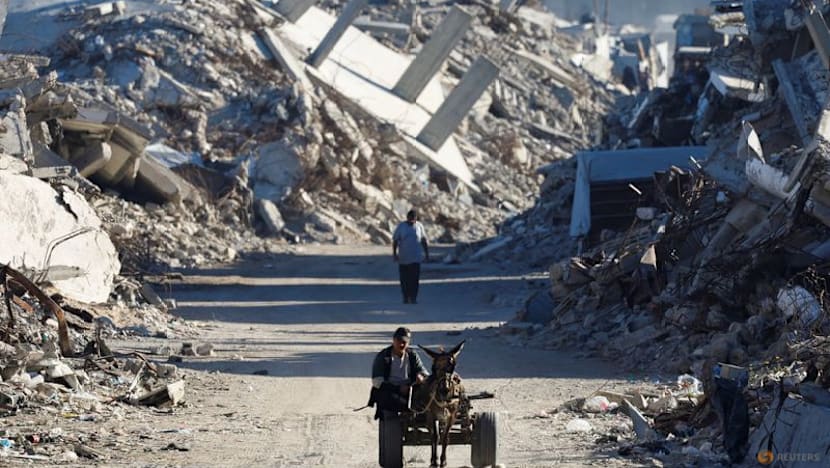
Israelis visit the Nova music festival memorial site to mark the third anniversary of the October 7, 2023 attacks. | Saeed Qaq/Anadolu via Getty Images This story appeared in Today, Explained, a daily newsletter that helps you understand the most compelling news and stories of the day. Subscribe here. Jewish communities in Israel and around the world are currently marking the third anniversary of the October 7 attacks that killed 1,200 people and triggered the war in Gaza. Memorials for the victims of the attacks have been held at homes, on highways, and at the site of the Nova music festival. In Tel Aviv, a massive art installation at the Trumpeldor beach commemorated both the victims and the 251 hostages taken by Hamas three years ago. Of those hostages, 166 have since returned alive, and the remains of the last deceased captive were released to Israel in January. But there’s no undoing the national trauma of the October 7 attacks — the deadliest massacre of Jewish people since the Holocaust — or the brutal retaliatory campaign that Israel launched afterward. Those events profoundly changed Israel, Gaza, the broader Middle East, and the United States, and they continue to shape global and domestic politics. So today, we’re taking a look at the very long shadow of the October 7 attacks and Israel’s response to them. Go a little deeper View Link Writing about the first anniversary of October 7 two years ago, Vox’s Zack Beauchamp warned that the “horrors” first triggered by the attacks would continue to unfold in tragic and unforeseeable ways. “Events that might seem contained to the Middle East have come to hurt people around the world,” he wrote, “in ways that we may not yet fully understand or even be capable of predicting.” That hurt has undeniably been most acute in the Gaza Strip, where three years of war have reduced entire cities to rubble. Israel’s military campaign has killed more than 74,000 Palestinians — most of them civilians — since October 2023. Most of Gaza’s 2 million residents have also been displaced from their homes, crowded into makeshift shelters and refugee camps riddled with hunger and disease. But the consequences of October 7 extended beyond Gaza. Settler violence against Palestinians intensified in the occupied West Bank. And the ensuing conflicts also weakened Iran and changed the balance of power across the Middle East. That’s because Iran had long relied on its allies, like Hamas in Gaza and Hezbollah in Lebanon, to project power and deter attacks by its longtime rival, Israel. After October 7, however, Israel significantly weakened both groups, leaving Iran vulnerable and setting the stage for the direct strikes on Iran that Israel and the US began last winter.  Both the war in Iran and the continued occupation of Gaza have badly hurt Israel’s international image. Across 36 countries surveyed by Pew last spring, a median of 67 percent of adults viewed Israel negatively. That disapproval has translated into diplomatic shifts, as well: 155 countries — including longtime allies of Israel, such as the United Kingdom, Canada, and Australia — now officially recognize Palestinian statehood, up from 136 before the war. That doesn’t change much on the ground, but it represents a real rebuke to Israel.  In the US, meanwhile, Israel has become a huge flashpoint in domestic politics. While more than half of Americans had a favorable view of the country before October 7, sentiment deteriorated sharply in 2025 and 2026, particularly on the left. The issue could help determine some key midterm races, like the Michigan Senate election, where Democrat Abdul El-Sayed has called for ending US military aid to Israel. That’s a policy nearly half of House Democrats and many potential presidential candidates have also endorsed.  Cutting off US aid to Israel isn’t likely to change the country’s stance toward Palestinians, however. (Israel is a wealthy country in its own right, and American aid represents just a small piece of its budget.) Instead, changing Israeli policy on Gaza and the West Bank would likely require far more aggressive pressure — pressure that, even in the current political environment, the US is unlikely to apply. A single day may have kicked off a cascade of hurt and horrors. But putting an end to them will take far more time. One link for later ➨ Cultivate hope. It can feel difficult (not to mention: naive, pointless, and exhausting) to maintain optimism in the face of current events. So Jamil Zaki, a psychology professor and the director of the Stanford Social Neuroscience Lab, suggests another tact: Do away with blind optimism and lean into hope — that belief that the future could turn out well, but requires real care and attention. Before you go… Did you know…that sea turtles regularly cry (okay: “shed tears”) to rid their bodies of excess salt? Scientists are studying sea turtle tears to learn more about animal navigation.  Today’s trivia: What’s the word for a baby eagle? (You can find this and other brain puzzles in Vox’s daily crossword. Look for the answer in tomorrow’s edition.) Yesterday’s trivia: Yesterday we asked you for the final letter of the Greek alphabet. That would be omega, as in the Bible verse, Swiss watch brand, and nutritional supplement.

YOUR NEWS, OUR NETWORK.

Do you have Great News you want to tell the world?

Be it updates about your business or your community, you can make sure that it’s heard by submitting your story to our network reaching hundreds of news sites across 6 verticals.

The Daily Feeder

A leading news network dedicated to keeping you up-to-date on the world's most important political, business, and cultural news into a three-minute read.

NEWSLETTER