Craig Henzel on Unlocking Leadership Potential

Dec 20, 2022

Craig Henzel, U.S. Coast Guard veteran and C-Suite business consultant is scheduled to release his book, Leadership From The Front Lines on Monday, December 19, 2022.

Glen Mills,United States - December 20, 2022 /PressCable/ —

As a leader in the U.S. Coast Guard and now C-Suite business consultant, Craig Henzel has been on the front lines in many different situations. He has learned how important it is to act quickly to address and mitigate risks while remaining focused on the outcomes and mission completion.

In his upcoming new book, Leadership From The Front Lines, the author shares his experiences with readers who are looking to level up their leadership skills in this new normal environment. The book provides a roadmap to success, based on his 25+ years of front-line leadership experience, both military and civilian. Henzel will provide readers with a clear path to achieving effective leadership skills while developing ultra-high-performing teams. Net proceeds from the book will go towards solving veteran homelessness in the U.S. – a huge problem.

His book will be available on Amazon starting Monday, December 19, 2022. Those interested can grab a copy of his book here: https://www.amazon.com/dp/B0BPTHF5WL

According to Henzel, “In the last two years, more has changed than we’ve seen in nearly a decade. The typical workday has stretched into the evenings and weekends, with employees working from home or a coffee shop. For many, emotions are running higher as we consider social equality in our society today. These social changes and statuses dominate our consciousness. Leaders who want to lead effectively need a way of addressing the needs that have been revealed by today’s dynamic environment. These include giving employees what they crave – sincere and honest communications and regaining lost control over their lives.”

The author’s diverse functional experience and a myriad of military and corporate examples show readers how to remain positive, develop their people and gain the most from their diverse teams. As we jump headlong into 2023, these time-tested leadership principles seem even more relevant now.

Leadership From The Front Lines provides readers with much-needed insight into how they can lead in the current climate. It offers guidance on what steps to take in a crisis (perceived or real), and even helps with tackling more mundane challenges like getting teams motivated or dealing effectively with difficult colleagues.

Craig Henzel’s global leadership experience spans 3 decades, having risen to the rank of Captain in the U.S. Coast Guard before transitioning to the role of a corporate executive. He has a bachelor’s degree in management from the U.S. Coast Guard Academy and a master’s degree in business from Boston University. He has taken that expertise into boardrooms across the Americas and Europe, driving tangible transformational change, most notably in senior executive positions at General Electric, Johnson & Johnson, Merck, AstraZeneca, Genpact, and Accenture.

Contact Info:
Name: Craig Henzel
Email: Send Email
Organization: Craig Henzel
Address: 1005 N Glen Dr, Glen Mills, PA 19342, United States
Website: https://www.leadershipfromthefrontlines.com/10-principles

Source: PressCable

Release ID: 89086806

If you detect any issues, problems, or errors in this press release content, kindly contact [email protected] to notify us. We will respond and rectify the situation in the next 8 hours.

More News

The bitter personal feud that could imperil a key Senate race for Democrats

Nov 2, 2026

The bitter personal feud that could imperil a key Senate race for Democrats

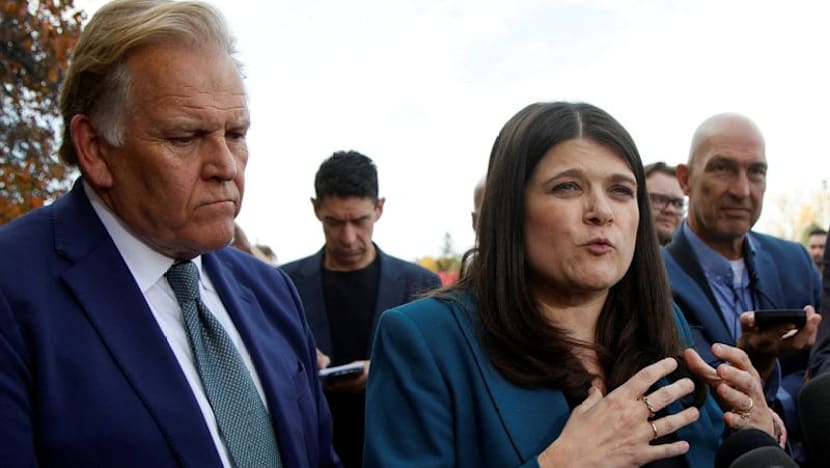
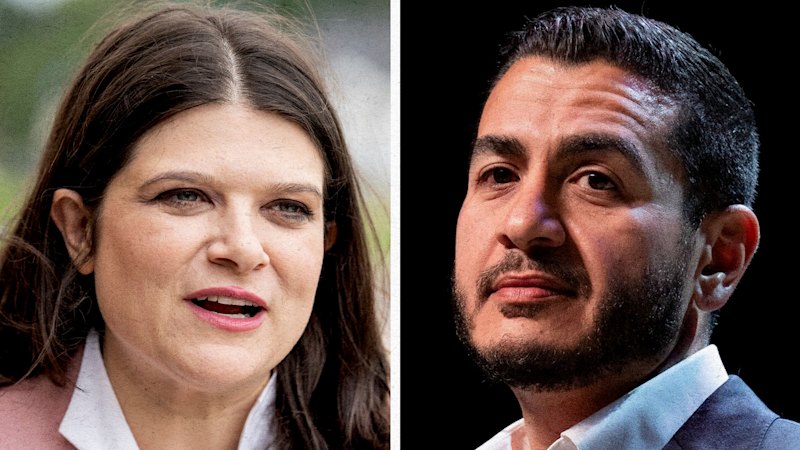
Former Rep. Mike Rogers, a Republican from Michigan and US Senate candidate, and Rep. Haley Stevens (D-MI), speak to members of the media following a service at Perfecting Church in Detroit, Michigan, on November 1, 2026. | Emily Elconin/Bloomberg via Getty Images Democrats in Michigan spent the weekend before Election Day angrily relitigating their Senate primary from months earlier after a defeated candidate, Rep. Haley Stevens, took back her endorsement of Democratic nominee Abdul El-Sayed — and backed the Republican instead. Key takeaways Rep. Haley Stevens had previously endorsed her Senate primary rival, Abdul El-Sayed, in his general election contest against Republican Mike Rogers, but she switched over to Rogers’s camp on Sunday. Stevens has cited comments Abdul El-Sayed made about Israel, and especially an ad from a PAC supporting El-Sayed that she viewed as antisemitic, in explaining her shift. Democrats, including many longtime Stevens supporters and staffers, near-unanimously denounced her for endorsing Rogers, often in harsh personal terms. The hope among Democrats is that this is essentially a personal feud and it won’t change many voters’ minds. On the surface, the fight gets to the heart of issues that have divided Democrats all year — between the party’s populist left-wing faction and its politically cautious centrists, and between vocal supporters and harsh critics of Israel — and that Republicans have hoped to ride to victory in Michigan in an otherwise difficult election year.  But it also is the culmination of a complicated and ongoing personal feud between the candidates — leading Democrats to hope that the damage might be contained, and that it was not representative of a broader shift within the electorate they’ve spent months working to consolidate.  How Sunday’s shock endorsement came about Initially, Stevens seemed to be enthusiastically on board with the party’s effort to bring Democrats together.  Shortly after Stevens narrowly lost the hard-fought Michigan Senate primary to Abdul El-Sayed, she endorsed El-Sayed and pledged her support in the general election. And though Stevens had begun to publicly criticize El-Sayed more in recent weeks, she reiterated in a CNN interview Wednesday that she’d vote for him. Multiple reports indicated she’d said the same to prominent Democrats as well, some as recently as Saturday.  But just two days before Election Day, Stevens stunningly reversed course — and endorsed El-Sayed’s Republican opponent, former Rep. Mike Rogers, on Sunday. The turnabout came after a days-long, tense back-and-forth between Stevens and El-Sayed, in which influential Democratic Reps. James Clyburn of South Carolina and Debbie Dingell of Michigan tried to negotiate an agreement for the former rivals to appear together at a unity event before the election.  Despite Stevens’s earlier endorsement, however, she had soured on El-Sayed in recent weeks because of the chief topic that divided them back during the primary: Israel. In particular, Stevens wanted El-Sayed to denounce an advertisement aired by a PAC backing him that she viewed as antisemitic, rather than just disavow any association with the ad, as he had done initially.  On Friday morning, Stevens posted an odd statement praising El-Sayed’s “expected condemnation” of the ad in advance of their joint campaign appearance. Then, by the end of the day Friday, El-Sayed’s campaign was letting it be known that the event was off, and that Stevens should stay away to avoid causing a distraction. Stevens did not take kindly to that. And Sunday, soon after appearing with Rogers at a Detroit church where she praised his record helping Black communities, Stevens released a video endorsing Rogers, mentioning how El-Sayed told her to “stay away” from his campaign. She added, “Who we are as Michiganders is not hate, and is not what we are getting out from our Democratic nominee right now.” Her endorsement was a coup for Rogers and his allies, who have been working to convince habitual Democratic voters — and Black and Jewish Michiganders, in particular — to treat El-Sayed as an extremist they should consider beyond the pale. And while polling is hardly any guarantee of the outcome, surveys have shown El-Sayed narrowly but consistently leading Rogers, suggesting this strategy was not getting the job done for Republicans. Yet it was also notable how quickly and vociferously Democrats across the board, including some of Stevens’s closest allies, spoke up to denounce what she had done.  More than half of Stevens’s congressional staff resigned in protest of her endorsement of Rogers. Michigan’s Democratic Party chair even declared that Stevens was no longer a member of the party and would not be permitted to rejoin it. And Senate Minority Leader Chuck Schumer (D-NY), who had strongly favored Stevens in the primary, called her actions “a despicable betrayal” and stressed that the party was “united in our support” for El-Sayed.  Some pointed fingers at Stevens’s fiancé Jason Turkish, an attorney and Democratic donor who endorsed Rogers days earlier, and did a media tour predicting Stevens would soon do the same. So the question is whether this last-minute drama exposes a real fissure inside the party — or whether this mess is more a tension of the specific personalities of the people involved. Why did Stevens turn against El-Sayed? At the heart of Stevens’s public criticism of El-Sayed were disputes over how to handle Israel, and where the line stood between criticism and antisemitism, a debate that has at times badly split Democrats this cycle. Stevens, first elected to Congress in 2018, has been a longtime champion of Israel. In 2022, when she was redistricted into the same district as Rep. Andy Levin — a Jewish Democrat who’d been sharply critical of the Netanyahu government — Stevens beat him in the primary, backed by $4 million in spending from AIPAC. (I interviewed Levin about that contest earlier this year.) But this year, in Michigan’s Senate primary, she faced El-Sayed — a very vocal critic of Israel and of the Democratic establishment’s backing of the Gaza war. And as the two sparred over Israel policy, AIPAC once again backed Stevens — this time, spending more than $30 million on the primary, the group’s biggest-ever investment in a single election. Stevens ended up losing the August primary by a margin of less than 1 percentage point; soon afterward she endorsed El-Sayed and hugged him at a unity breakfast. “It’s a big-tent party,” she said then. She said it was time to focus on beating Mike Rogers and the GOP, and that “the time for all this negative, nasty, the disunity stuff — it’s over.”  Yet they did not campaign together after that, and an account by CNN’s Edward-Isaac Dovere of the continuing tensions between them last week seemed to put most of that on the El-Sayed campaign; Dovere’s sources portrayed El-Sayed as uninterested in cultivating the relationship.  Then, Stevens told the New York Times, her doubts had been reignited because of an October 8 debate in which El-Sayed repeatedly refused to answer a moderator’s question about whether he thought Israel or Iran was a greater threat to the United States. (El-Sayed called it a “ridiculous hypothetical” and said both were “kind of dangerous,” with “one at risk of attacking us, one getting us into wars we have no business fighting.”) After that, on October 23, the pro-El-Sayed PAC released its controversial ad, in which people say grocery prices were high because too much government money is being spent helping Israel with “killing Palestinians” and funding Israelis’ universal healthcare. The ad closed by saying Mike Rogers was for “they/them” (over pictures of Israeli Prime Minister Benjamin Netanyahu and his far-right allies), while “Abdul El-Sayed is for you.” The ad — put out by Cenk Uygur, a left-wing commentator who is the uncle of streamer Hasan Piker — was reused from 2024 and had little money behind it. But it went viral online, and critics called it antisemitic.  The ad became a major sticking point in Stevens’s negotiations with the El-Sayed team. Turkish, her fiancé, publicly denounced it as antisemitic, blaming El-Sayed for putting “Jews at risk.” And though El-Sayed’s spokesperson had said the ad didn’t speak for their campaign, Stevens wanted a more unambiguous condemnation.  So on Friday morning, Stevens posted her unusual statement promising to campaign with El-Sayed on Sunday and praising his “expected” condemnation of the ad. “A unifying moment has arrived, our democratic nominee for U.S Senate disavows the Rebellion PAC ad made by Hasan Piker’s uncle that claims Jews are responsible for America’s economic woes. We have learned from party leaders and emissaries, as reported in the news media that he has,” Stevens posted on X. This was widely taken as an ultimatum to El-Sayed, and he decided not to play ball; word leaked out that his campaign did not want Stevens at any of their events anymore. “Our campaign is and always has been focused on addressing the most critical challenges Michiganders are facing,” he posted. “Congresswoman Stevens seems intent on litigating a primary that ended three months ago.” At a campaign event Saturday, El-Sayed was asked about the ad, and said: “That ad was not made by me, and I do not agree with the contents of that ad.” He also called it “not really of relevance to Michigan voters.”  Stevens’s endorsement of Rogers came the following day.  And after that came the backlash from Stevens’s fellow Democrats. The Democratic response to Stevens’s endorsement of Rogers Within hours, Stevens was effectively ostracized from the party, with even her own top aides abandoning her.  Stevens’s chief of staff Justin German said in a statement that he had served with her for eight years, and that he was “shocked and heartbroken” by her endorsement of Rogers, adding: “As of this morning, many members of our team have resigned, incl

YOUR NEWS, OUR NETWORK.

Do you have Great News you want to tell the world?

Be it updates about your business or your community, you can make sure that it’s heard by submitting your story to our network reaching hundreds of news sites across 6 verticals.

The Daily Feeder

A leading news network dedicated to keeping you up-to-date on the world's most important political, business, and cultural news into a three-minute read.

NEWSLETTER